Proudly serving Phoenix, Mesa, Scottsdale, Glendale, Chandler, Tempe & surrounding areasCall or Text 24/7: 480-264-9793
Aerial view of Phoenix, AZ residential neighborhoods, saguaro cacti, and desert landscape during golden hour.

Residential Demolition Services in Phoenix, AZ for Homeowners, Investors & Property Managers

Phoenix Demolition Co. provides residential demolition for homeowners, investors, and property managers in Phoenix, Arizona. Our crews handle whole-house and structural teardowns, interior demolition, and selective removal for renovation projects. We also remove concrete and foundations, pools, garages, sheds, flooring, and roofing when those items are part of the scope. Site clearing and debris removal carry the project through to a clean, level lot.

Thousands of Phoenix-area ranch homes and mid-century buildings date to the postwar boom of the 1950s and 60s, while U.S. buildings average roughly 71 years of service life before demolition or replacement. Tight residential lots require equipment and sequencing that protect adjacent structures, utilities, and rooms that will remain. Sonoran Desert dust also demands active suppression, especially in a county with PM10 nonattainment status. We combine a property-specific plan with a documented scope and controlled sequencing.

Call for a free demolition quote, and we will walk the property before pricing the work. That visit lets us evaluate structure type, access, environmental needs, debris handling, and the condition you need the site left in.

Phoenix Demolition Co. provides residential demolition in Phoenix, Scottsdale, Tempe, Mesa, Glendale, and the greater Salt River Valley.

★ ★ ★ ★ ★4.9/5 Average Rating · 20+ Years of Experience · Thousands of Customers Helped · Licensed & Insured · Residential & Commercial

Residential Demolition Options & Benefits

What Is Residential Demolition?

Residential demolition is the planned removal of a home, part of a home, or another structure on a residential property. The scope may range from a complete takedown to a targeted strip-out that leaves the building shell in place.

Full structural demolition brings a building down to grade, while selective demolition removes only the components needed for a remodel or repair. Temporary shoring, controlled sequencing, and protection for adjoining areas help keep the structure stable as work progresses.

Mini excavators, skid steers, and hydraulic breakers let us match the equipment to narrow residential access, concrete removal, and larger structural scopes. Debris is sorted, loaded, hauled, and followed by grading when the project calls for a redevelopment-ready lot.

Benefits of Professional Residential Demolition

A coordinated demolition scope connects removal, compliance, debris handling, and final site condition instead of leaving separate phases for the owner to solve. The right approach also preserves anything scheduled to remain.

  • A documented scope based on the actual property
  • Controlled sequencing for structural stability
  • Protection for adjacent walls, ceilings, and pathways
  • Dust suppression suited to Phoenix conditions
  • Material separation for salvage and recycling
  • Permit and utility-disconnect coordination
  • Proper hauling to licensed facilities
  • Final clearing and grading for the next use
Residential Demolition Services

Residential Demolition Services

Our residential work covers complete teardowns, careful interior removal, concrete and pool projects, and the cleanup that follows. Each service is scoped around the structure, access, materials, and what must remain protected.

Whole-House & Structural Demolition

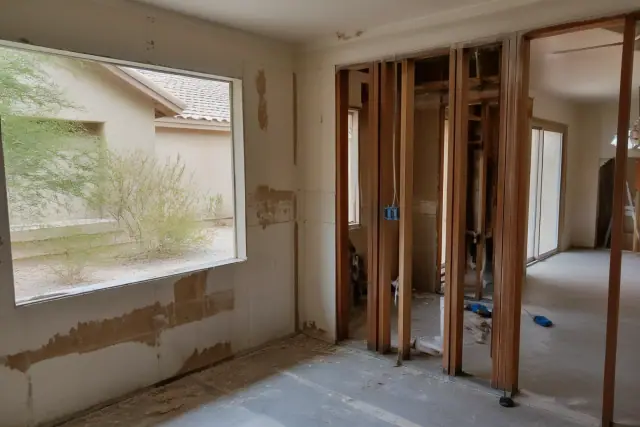
Interior of a home during a residential demolition project with exposed wall framing in Phoenix, AZ.

We take houses and other structures down to grade using a controlled sequence that accounts for roofs, load-bearing elements, and temporary shoring where needed. Standard whole-house removal generally falls closer to $4 to $12 per square foot before site-specific add-ons.

Request Estimate

Interior Demolition

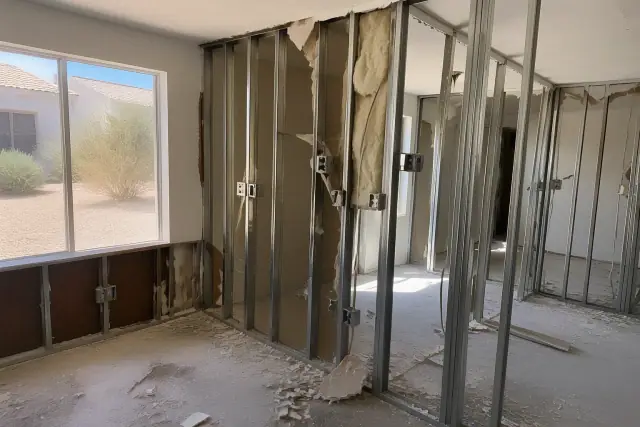
Partially dismantled drywall and metal stud walls during a residential interior demolition in Phoenix, AZ.

Interior demolition removes cabinetry, tile, drywall, fixtures, and other finishes while the shell remains. Partial demolition for a kitchen, bathroom, or similar remodel typically runs $5 to $16 per square foot of the affected area, depending on materials and access.

Request Estimate

Selective Demolition

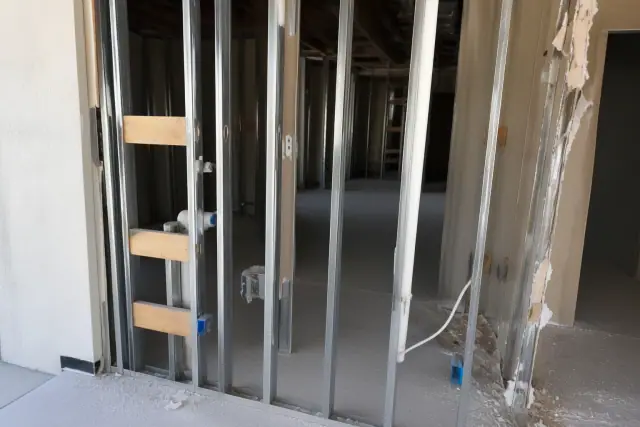
Partially dismantled drywall and exposed metal studs during a residential gut renovation in Phoenix, AZ.

Selective demolition targets specific walls, finishes, or components without disturbing the rest of the structure. We mask, seal, brace, and create protected debris pathways so dust and vibration are less likely to affect rooms staying in place.

Request Estimate

Concrete & Foundation Removal

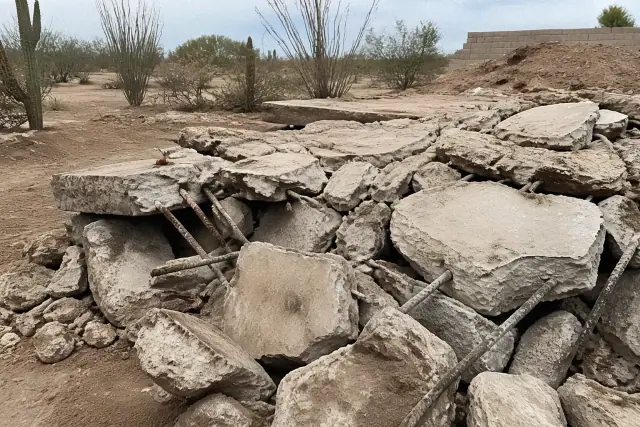
Fractured concrete slab and exposed rebar during a residential foundation removal project in Phoenix, AZ.

Hydraulic breakers and excavator-mounted attachments break slabs, footings, concrete pads, and driveways into manageable pieces. Qualifying broken concrete is crushed and hauled for recycling rather than mixed into the general debris stream.

Request Estimate

Pool Demolition & Removal

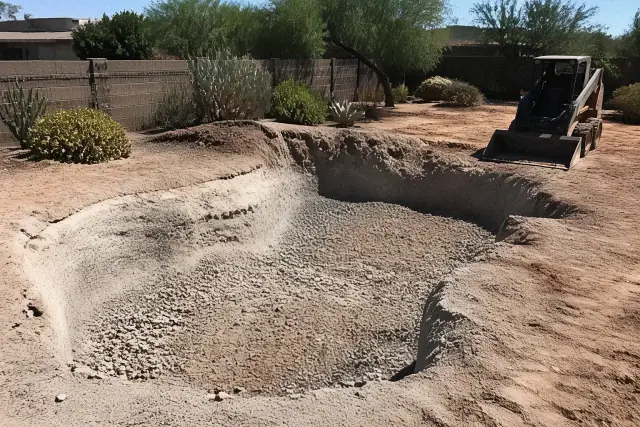
Skid steer parked at an active residential in-ground pool removal and excavation site in Phoenix, AZ.

For an in-ground pool, we can remove the shell completely or perform a partial demolition and backfill with engineered fill compacted in lifts to reduce settling. Above-ground pool removal is also available for residential properties.

Request Estimate

Site Clearing & Debris Removal

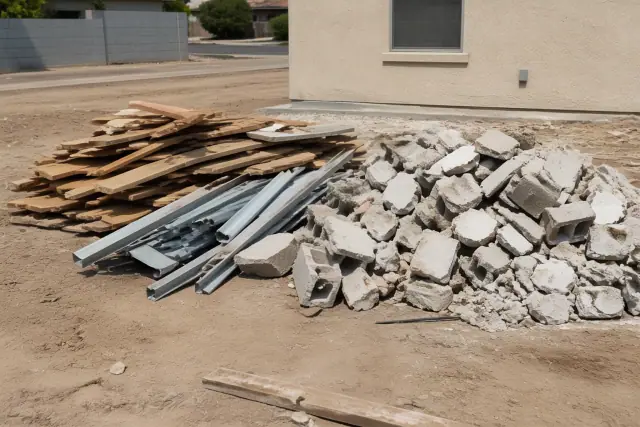
Sorted construction debris pile with wood, metal, and masonry at a residential demolition site in Phoenix, AZ.

Excavators and skid steers load sorted debris into roll-off containers or dump trucks staged on site. After hauling, we clear and grade the lot and can coordinate soil removal when contaminated fill or old foundation material must leave before redevelopment.

Request Estimate
Project-Specific Removal

Specialized Residential Demolition Options

Many Phoenix residential projects combine a main teardown with one or more targeted removals. These specialized options can be scoped alone or coordinated with broader structural demolition.

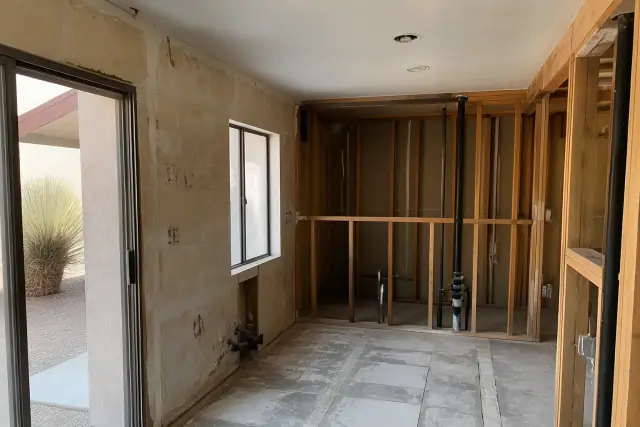
Interior view of a residential gut renovation with exposed wall framing in Phoenix, AZ.

Kitchen & Bathroom Gut-Outs

A controlled gut-out opens a kitchen or bathroom for renovation while keeping the surrounding shell and needed building systems accessible.

  • Cabinetry removal
  • Tile and backsplash removal
  • Drywall strip-out
  • Fixture removal
  • Accessible plumbing and electrical rough-ins
Request Estimate
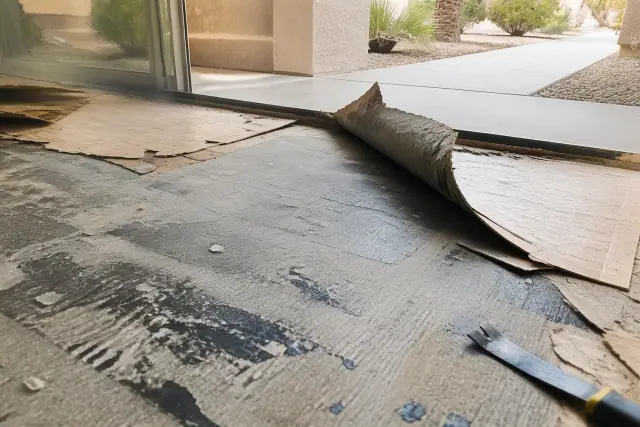
Torn vinyl flooring being removed from a subfloor during a residential demolition in Phoenix, AZ.

Flooring Removal

Flooring removal is matched to the surface, adhesive, and conditions beneath it so the area is ready for the next construction phase.

  • Tile removal
  • Hardwood removal
  • Carpet removal
  • Old linoleum removal
  • Asbestos-mastic screening in homes built before 1980
Request Estimate
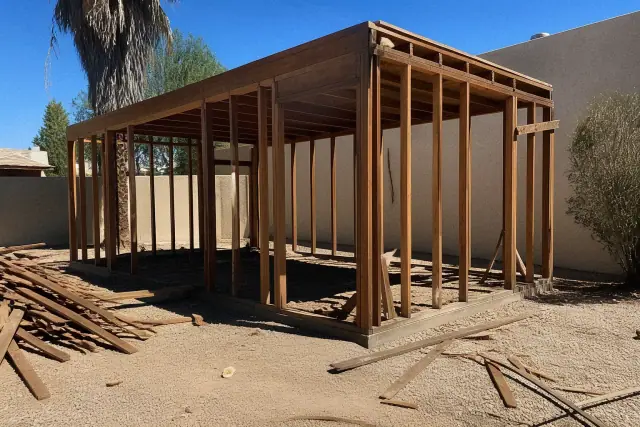
Partially dismantled garage structure with exposed wooden framing and debris during a residential demolition in Phoenix, AZ.

Garage, Shed & Outbuilding Removal

Detached structures can be removed without taking down the main home. A standard two-car detached garage can usually come down with a mini excavator in a single day.

  • Detached garage demolition
  • Residential shed removal
  • Other outbuilding removal
  • Proper roofing-material disposal
  • Separate handling for treated lumber
Request Estimate
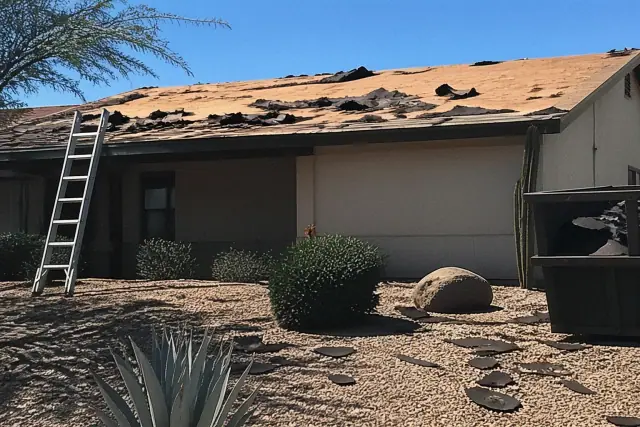
Torn shingles and exposed roof decking during a residential demolition project in Phoenix, AZ.

Roof Demolition

Roofing is removed in sequence before wall demolition on structural teardown projects, reducing overhead material and helping the remaining takedown proceed predictably.

  • Tile roof removal
  • Shingle roof removal
  • Roofing debris separation
  • Reduced fall hazards before wall removal
  • Sequencing coordinated with the full teardown
Request Estimate
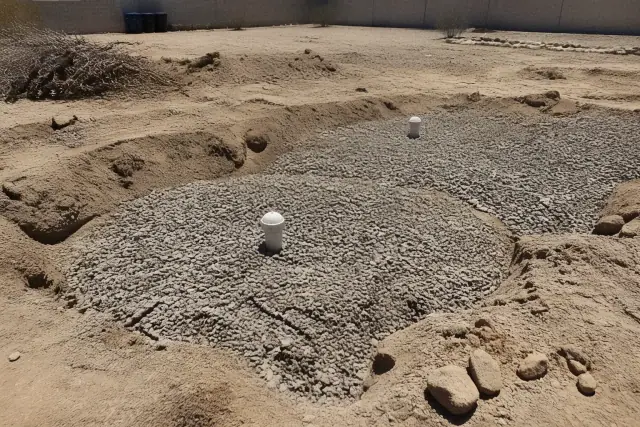
Excavation pit showing PVC piping and gravel for well and septic abandonment at a residential job site in Phoenix, AZ.

Well & Septic Abandonment

Older rural-adjacent parcels, mobile homes, and legacy properties may need well or septic abandonment coordinated as part of the demolition and redevelopment scope.

  • Arizona water-rule coordination for wells
  • Septic tank pumping
  • Tank collapse and backfill
  • Maricopa County oversight coordination
  • Site preparation for redevelopment
Request Estimate
Why Homeowners Choose Us

A Residential Demolition Approach Built Around Your Site

No two demolition sites have the same access, construction, environmental needs, or plans for what comes next. We build the scope around those differences instead of forcing every property through one standard teardown.

Project-Specific Scoping

We walk the property before quoting so the written scope reflects square footage, structure type, equipment access, debris handling, and the exact components scheduled for removal.

Permits & Compliance Coordination

We coordinate City of Phoenix permit information, utility-disconnect confirmation, asbestos documentation when applicable, and required environmental filings as part of the project scope.

Careful Site Protection

Tight-lot equipment, temporary shoring, sealed work areas, and protected debris routes help preserve adjacent structures, utilities, and finished spaces that are not part of the demolition.

Problems We Solve

Residential Demolition Problems We Solve

Homeowners call us when an aging structure, remodel, pool, slab, or redevelopment plan requires more than simple hauling. Our crews work within OSHA 29 CFR 1926 demolition standards while coordinating the scope from walkthrough through cleanup.

Request a Site Walkthrough

Aging or Obsolete Homes

Postwar block homes and other older Phoenix structures can reach a point where replacement makes more sense than another repair. We evaluate the structural type, adjacent-property exposure, and desired end condition before planning the takedown.

Remodel Strip-Out Needs

Kitchen, bathroom, flooring, and wall removal must clear the intended renovation area without damaging the shell or rough-ins the next contractor needs. Selective methods focus work on only the scheduled components.

Vacant Property Liabilities

A foreclosure or long-vacant structure can become a liability when deterioration makes reuse impractical. Structural demolition removes the building in a controlled sequence and carries the debris through proper hauling.

Unwanted Pools or Outbuildings

An aging pool, detached garage, or shed may no longer fit how the property is used. We match the removal method to the structure and include roofing, treated lumber, shell material, or engineered backfill in the scope where applicable.

Concrete & Foundation Obstacles

Old slabs, footings, driveways, and concrete pads can block a new layout or redevelopment. Breakers and excavator attachments reduce the concrete for loading, with recycling used when the material qualifies.

Utility & Environmental Requirements

Pre-1980 structures may need asbestos surveying or abatement planning, and pre-1978 properties call for lead-paint precautions. Regulated structures can require written NESHAP notification at least 10 working days before demolition, while utilities must be disconnected before work begins.

How It Works

Our Residential Demolition Process

A clear sequence keeps the project moving from the first site visit to the final grade. We confirm scope and compliance needs before equipment arrives, then control removal, material handling, and cleanup.

01.

Site Walkthrough & Scope

We inspect the structure, access, surrounding property, and requested end condition. That information becomes the basis for a written scope and free demolition quote.

02.

Permits, Surveys & Disconnects

We identify the correct authority, assemble permit information, confirm APS, SRP, or Southwest Gas disconnects as applicable, and coordinate an asbestos survey when the structure predates 1980.

03.

Salvage & Hazard Planning

Before takedown, we identify fixtures, cabinetry, doors, metal, and other materials that can be salvaged or separated. Hazardous-material streams and adjacent-property protections are planned before general debris handling.

04.

Controlled Demolition

The crew sequences roofing, load-bearing components, walls, and concrete according to the scope. Temporary shoring and equipment sized for the site help the structure come down predictably.

05.

Sorting, Loading & Hauling

Wood, metal, concrete, and hazardous materials are kept in the appropriate streams. Excavators and skid steers load containers or dump trucks for transport to licensed transfer stations, recycling facilities, or landfills.

06.

Clearing & Final Grading

We remove remaining debris, address old foundation material or coordinated soil removal, and grade the property. The goal is a clean site ready for the builder, spec home, commercial pad, or other planned next use.

Start With a Site Walkthrough

Plan Your Phoenix
Residential
Demolition

Tell us what needs to come down and what you plan to do with the property afterward. We will walk the site, identify scope and access considerations, and prepare a free demolition quote based on the actual job.

Residential Demolition Help

Residential Demolition FAQs

These answers cover pricing, permits, preparation, removal methods, and cleanup for Phoenix residential demolition projects. A site walkthrough is still the best way to define the scope for a particular property.

Call About Your Project

Arizona house demolition typically runs $8,000 to $25,000 in 2025 and 2026. Across different whole-house conditions, quoted ranges can span about $4 to $17 per square foot, with structure type, access, masonry, multiple roof layers, and added environmental work affecting the final number.

Using the typical $4 to $12 per square foot range for full-structure removal, a 2,000-square-foot home generally falls between $8,000 and $24,000 before add-ons. Basements, masonry construction, limited access, asbestos work, well abandonment, or septic abandonment can move the price higher.

The City of Phoenix Planning and Development Department requires a demolition permit before interior or exterior demolition begins. The application typically includes contractor licensing information, utility-disconnect confirmation, and an asbestos survey for a structure built before 1980; designated historic districts receive an additional Historic Preservation review.

Utilities generally need to be disconnected before demolition starts. Phoenix Demolition Co. can coordinate shutoffs with APS, SRP, or Southwest Gas as part of the project, or the owner can arrange that step before the crew arrives.

Look for current Arizona Registrar of Contractors credentials and a clear written scope. A qualified contractor should also explain who pulls the permit, how utilities and environmental requirements are handled, and how debris will be sorted and hauled.

Yes. Interior and selective demolition can remove kitchens, bathrooms, flooring, drywall, fixtures, or specific walls while preserving the shell and other areas scheduled to remain.

Homes built before 1980 often contain asbestos in flooring mastic, popcorn ceilings, or pipe insulation, so the project may require a survey and abatement planning. For regulated structures, federal NESHAP procedures under the Arizona Department of Environmental Quality can require written notice before demolition.

Wood, metal, concrete, and hazardous materials are separated rather than mixed into one load. Recyclable material is diverted where possible, and the remaining debris is hauled to licensed transfer stations or landfills serving Maricopa County.

Full pool demolition removes the shell and hauls it away. Partial demolition breaks down part of the shell and backfills the pool with engineered fill compacted in lifts to help prevent settling.

A standard two-car detached garage can usually be removed with a mini excavator in a single day. Access, construction type, utilities, roofing materials, and the amount of debris can change the schedule for a particular property.

Mini excavators and skid steers are sized for many restricted residential sites, while hydraulic breakers handle slabs and footings. Larger commercial-style equipment is used only when the project footprint and scope call for it.

The crew uses dust suppression suited to Sonoran Desert conditions and limits how long loose debris sits exposed before loading. This is especially important in Maricopa County because uncontrolled demolition dust can draw air-quality enforcement attention.

The draft's Phoenix market estimate places new custom construction at roughly $350 to $600+ per square foot, making demolition a smaller part of the total redevelopment budget. The demolition quote still depends on the existing structure, site access, environmental requirements, and the final site condition needed by the builder.