Proudly serving Phoenix, Mesa, Scottsdale, Glendale, Chandler, Tempe & surrounding areasCall or Text 24/7: 480-264-9793
Aerial view of Phoenix, AZ residential neighborhoods, saguaro cacti, and desert landscape during golden hour.

Concrete Demolition & Removal in Phoenix, AZ for Driveways, Slabs & Foundations

Phoenix Demolition Co. provides concrete demolition and removal across Phoenix, Arizona, for residential and commercial properties. We remove cracked driveways, patios, pool decks, slab foundations, parking areas, and interior concrete. Our crews also handle selective and structural demolition, flooring removal, pool removal, site clearing, and debris haul-off when those services are part of the project. Each scope is matched to the slab, reinforcement, access, and surrounding features that must remain.

Caliche, expansive clay, monsoon-driven ground shift, and desert sun can leave Valley concrete cracked or uneven. Before breaking begins, we check slab thickness, reinforcement, utilities, access, and nearby walls or irrigation. Hydraulic breakers, diamond sawcutting, jackhammers, crushers, excavators, and skid-steer attachments are selected for the conditions. Licensed and insured crews use controlled methods, dust controls, and planned haul routes to protect the rest of the property.

Request an on-site assessment and free written quote based on the concrete, reinforcement, access, and disposal volume. When permits apply, we coordinate with the City of Phoenix Planning and Development Department before work begins.

Phoenix Demolition Co. provides concrete demolition and removal throughout Phoenix and the surrounding metro, including Scottsdale, Tempe, Mesa, Glendale, Chandler, and Peoria.

★ ★ ★ ★ ★4.9/5 Average Rating · 20+ Years of Experience · Thousands of Customers Helped · Licensed & Insured · Residential & Commercial

Concrete Removal Options & Benefits

What Is Concrete Demolition and Removal?

Concrete demolition and removal is the controlled cutting, breaking, loading, and haul-off of an unwanted slab or selected concrete section. The scope can range from a backyard patio to a reinforced commercial pad, pool shell, foundation section, or interior floor.

The right method depends on square footage, thickness, rebar or post-tensioning, equipment access, and the structures that must stay intact. Regional data places sawing and removal together at around $4.37 per square foot, but an on-site quote is needed because those conditions can change the actual price.

Crews create controlled edges where needed, break the concrete into manageable pieces, separate metal, and load the debris for recycling or licensed disposal. Grading can then leave the area ready for new concrete, pavers, landscaping, or construction.

Benefits of Professional Concrete Removal

Professional removal combines the right equipment, site controls, and debris plan so the target concrete comes out without turning the rest of the property into another repair project.

  • Controlled sawcuts help protect adjoining concrete and structures.
  • Utility and irrigation checks reduce avoidable underground damage.
  • Breaker size is matched to slab thickness and reinforcement.
  • Direct loading keeps broken concrete from piling up on site.
  • Rebar and other metal can be separated for scrap recycling.
  • Qualifying concrete can be crushed into reusable base material.
  • Permit needs are checked before structural work begins.
  • Final cleanup and grading prepare the area for its next use.
Residential & Commercial Concrete

Phoenix Concrete Demolition Services

We tailor concrete removal to the surface, property type, access, and next phase of work. Services cover small residential slabs, reinforced commercial concrete, interior surfaces, pool structures, and the clearing and haul-off needed after demolition.

Driveway Removal

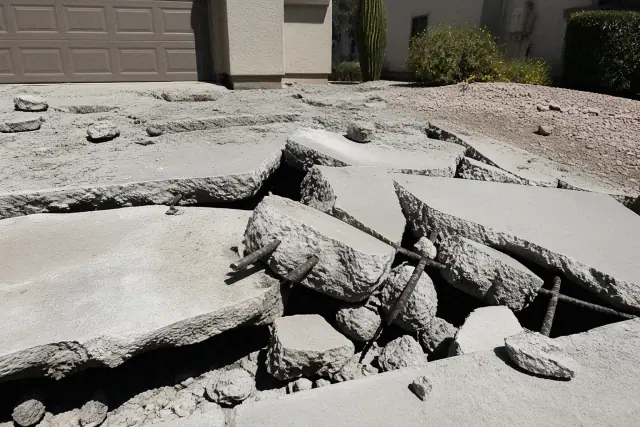
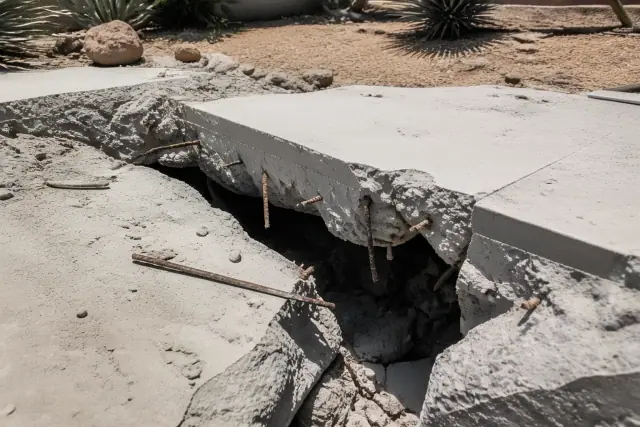
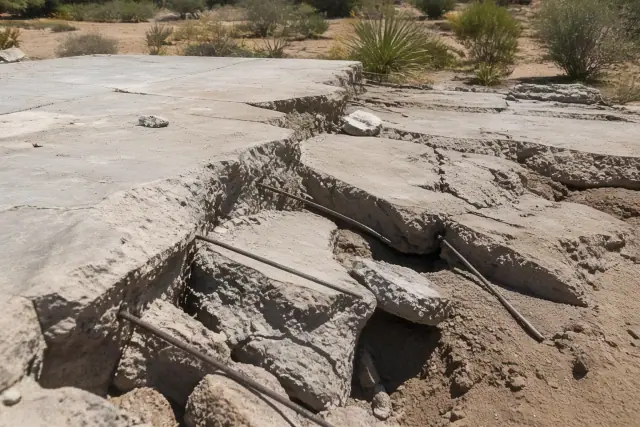
Broken concrete driveway slab with exposed rebar during a demolition project in Phoenix, AZ.

Residential driveways are commonly 4 to 6 inches thick and often unreinforced. Removal typically falls toward the $2 to $7 per square foot range, with the slab broken into manageable sections, loaded out, and the base graded for new concrete or pavers.

Request Estimate

Patio and Pool Deck Removal

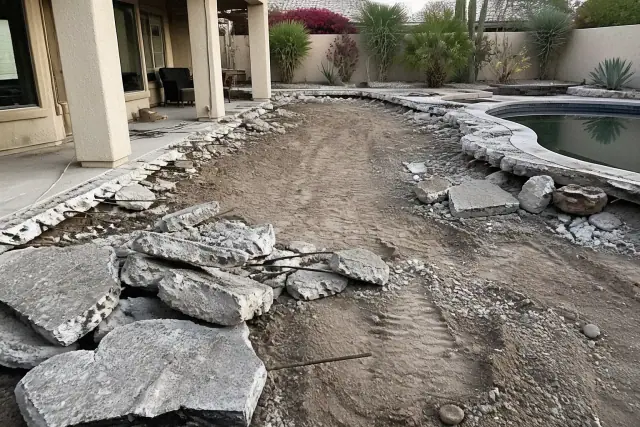
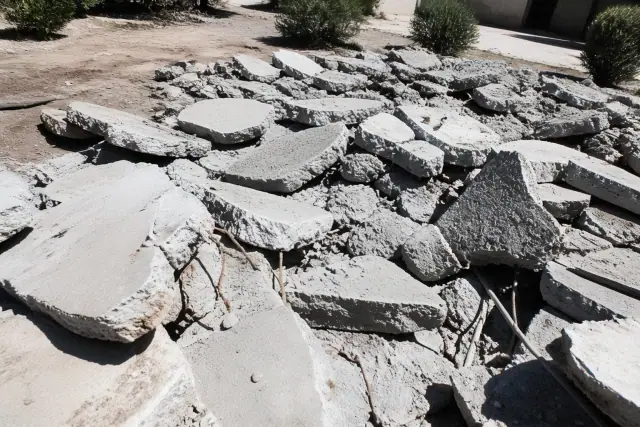
Broken concrete patio and pool deck debris at a demolition site in Phoenix, AZ.

Patios and pool decks may meet block walls, covered ramadas, landscaping, or the pool shell. We assess those connections and use careful sawcutting so cracks and vibration stay inside the intended removal area.

Request Estimate

Commercial Slab and Parking Area Removal

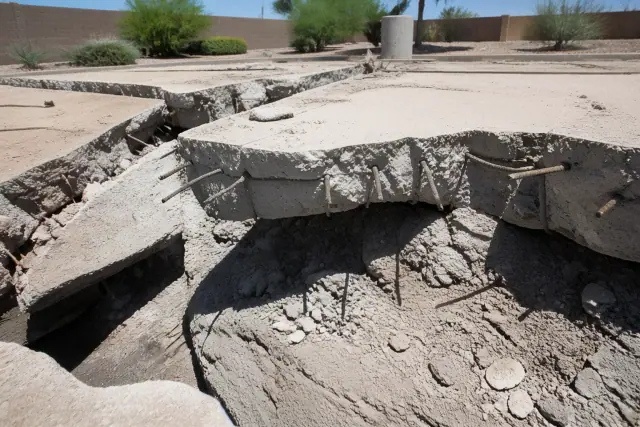
Fractured concrete slab with exposed rebar during demolition at a job site in Phoenix, AZ.

Commercial floors and parking areas often use 6- to 8-inch slabs with light rebar and may cost $4 to $8 per square foot for removal alone. Larger breakers, excavators, haul trucks, and phased work help keep accessible parts of the property functional where possible.

Request Estimate

Interior Concrete and Flooring Removal

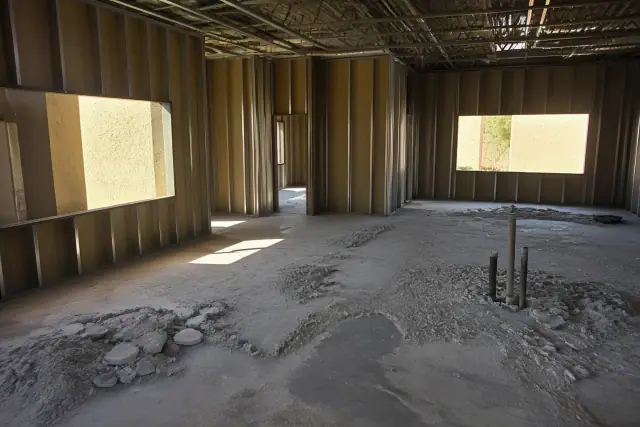
Interior office space under construction with exposed studs and concrete debris at a project site in Phoenix, AZ.

Interior scopes can include tile, hardwood, glued-down flooring, non-structural walls, and selected foundation sections over slab-on-grade construction. HEPA-filtered vacuum attachments and dust-control methods help contain silica dust while the surrounding building remains protected.

Request Estimate

Pool Demolition and Removal

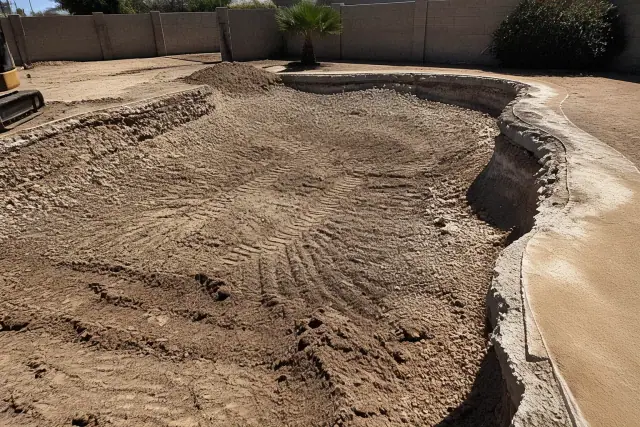
Heavy machinery tracks and loose aggregate in an in-ground pool demolition site in Phoenix, AZ.

Pool projects can use full removal, which takes out the shell, or partial removal, which breaks the bottom for drainage and backfills the remaining structure. Pool decks are removed in controlled sections, and concrete, rebar, and equipment are separated on site.

Request Estimate

Site Clearing and Debris Removal

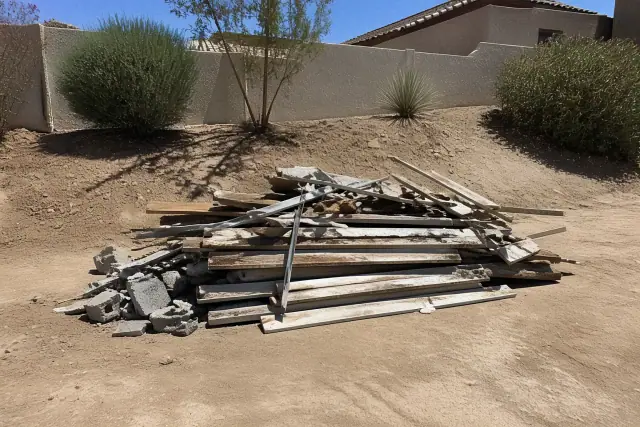
A pile of sorted construction debris from concrete demolition at a job site in Phoenix, AZ.

Site clearing can include concrete haul-off, rubble removal, grading, excavation, and fill dirt or rock removal. We size trucks and containers to the volume, track tonnage when reporting is needed, and leave the site ready for landscaping or construction.

Request Estimate
Methods Matched to the Material

Concrete Removal Approaches

Concrete is not removed with one universal technique. Slab thickness, reinforcement, access, adjacent structures, disposal needs, and the intended reuse of the site determine whether a job calls for mechanical breaking, precise cutting, controlled selective work, crushing, or a combination.

Full-slab mechanical demolition of a concrete pad with exposed rebar on a jobsite in Phoenix, AZ.

Full-Slab Mechanical Demolition

Mechanical demolition uses hydraulic force to break larger open slabs efficiently. The machine and attachment are selected to keep pieces manageable for loading without wasting time on equipment that is too light for the concrete.

  • Hydraulic breakers for controlled slab fracturing
  • Skid-steer attachments for accessible residential areas
  • Excavators for larger commercial concrete
  • Concrete crushers for breaking and material reduction
  • Direct loading into trucks or containers
Request Estimate
Concrete slab with jagged edges and exposed rebar after precision sawcutting at a job site in Phoenix, AZ.

Precision Sawcutting and Selective Removal

Diamond-blade sawcutting creates a clean boundary when only part of a slab should come out. Selective demolition uses that boundary and controlled breaking to preserve adjoining surfaces, utilities, property lines, and structural elements.

  • Clean edges around the removal zone
  • Targeted sections instead of a full slab
  • Added control near walls and foundations
  • Careful work around utilities and irrigation
  • Useful for remodels and partial replacements
Request Estimate
Fractured concrete slab with exposed rebar at a demolition site in Phoenix, AZ.

Reinforced and Post-Tensioned Concrete

Rebar mesh and post-tensioned cable change how concrete must be cut and broken. Reinforcement is identified before quoting so crews can select enough hydraulic force and avoid cutting a tensioned cable incorrectly.

  • Rebar type checked before demolition
  • Post-tensioned cable locations identified
  • Breaker capacity matched to the slab
  • Steel separated from broken concrete
  • Removal sequenced to protect structural stability
Request Estimate
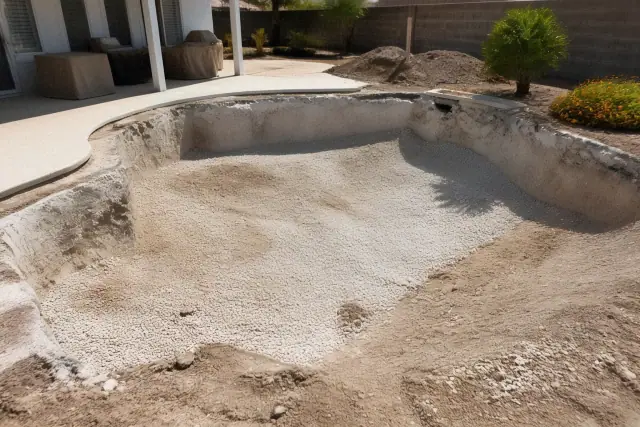
Excavated pool basin filled with aggregate and dirt at a concrete removal site in Phoenix, AZ.

Full and Partial Pool Removal

The right pool-removal approach depends on the property's future use and tolerance for settlement risk. Full removal takes out the shell, while partial removal opens the bottom for drainage and backfills the remaining structure.

  • Full shell removal for a cleared excavation
  • Partial removal with bottom drainage openings
  • Sectioned removal of reinforced pool decks
  • Concrete, rebar, and equipment separated
  • Backfill coordinated with the selected approach
Request Estimate
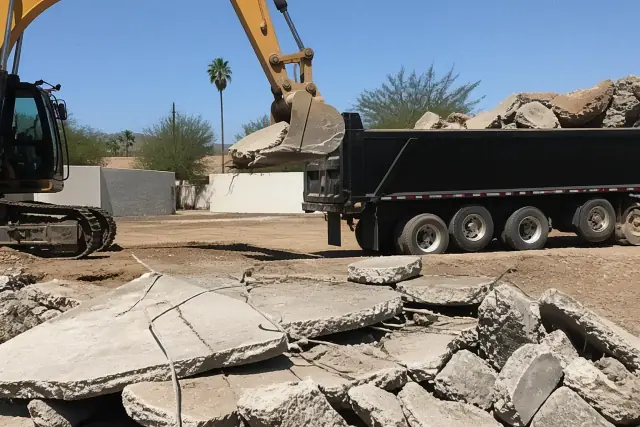
Heavy machinery loading chunks of fractured concrete with exposed rebar at a demolition site in Phoenix, AZ.

Concrete Recycling and Haul-Off

Concrete debris is routed to recycling or licensed disposal facilities rather than left for the property owner to manage. Where the material and site qualify, crushing can turn broken slabs into aggregate for road base or fill.

  • On-site separation of concrete and metal
  • Rebar routed for scrap recycling
  • Qualifying concrete crushed into base material
  • Truck and container capacity matched to volume
  • Final rubble cleanup and grading
Request Estimate
Plan the Scope Before Breaking

Choosing the Right Concrete Demolition Approach

A useful plan starts with the slab's dimensions, thickness, reinforcement, access, nearby utilities and structures, and what will replace the concrete. An on-site assessment turns those details into a written scope, equipment plan, disposal route, permit check, and quote.

Equipment Matched to the Slab

Hydraulic breakers, walk-behind and ride-on jackhammers, skid-steer attachments, crushers, and excavators serve different conditions. Matching the tool to the concrete prevents a light breaker from stalling on material such as 6-inch commercial-grade concrete.

On-Site Assessment and Written Quote

We inspect the slab, measure the work area, check reinforcement and access, and review disposal needs before scheduling. The written quote reflects the actual site conditions instead of relying on an unseen phone estimate.

Property and Site Protection

Crews locate utilities, mark the work zone, protect adjacent structures, and use controlled force, sawcuts, and dust measures before loading begins. The plan is designed around both the concrete being removed and the features that must remain.

What Sets the Work Apart

Why Choose Phoenix Demolition Co. for Concrete Removal?

From a cracked patio to a commercial parking section, the same fundamentals apply: inspect first, choose equipment for the material, protect adjoining property, and finish the haul-off and grading. Request a free on-site quote for a scope based on the actual slab instead of an estimate made without measurements.

Request a Free Quote

Cracked or Uneven Concrete

Caliche, expansive clay, monsoon-driven ground movement, and prolonged desert sun can leave driveways, patios, and pool decks cracked or uneven. Removal clears the failed surface so the next project can start from a prepared base.

Rebar and Post-Tensioned Reinforcement

Rebar can hold broken concrete in heavy, tangled sections, while post-tensioned cable requires identification before cutting. A rented breaker that is too light for 6-inch concrete may waste hours without separating the reinforced slab safely.

Tight Access Near Structures

Concrete beside block walls, covered patios, pool shells, landscaping, or occupied buildings leaves little room for uncontrolled breaking. Sawcut boundaries, smaller equipment, and a planned loading path help contain work to the target area.

Buried Utilities and Irrigation

Irrigation lines and utility conduits may sit only a few inches below Phoenix yards. Locating and marking them before breaking reduces the risk of turning concrete removal into an underground repair.

Dust, Vibration, and Flying Debris

Interior flooring work can release silica dust, while uncontrolled exterior breaking can send vibration and fragments toward nearby surfaces. HEPA-filtered extraction, dust controls, barriers, and controlled hydraulic force keep those effects focused on the work zone.

Heavy Debris and Disposal Logistics

Commercial pads and pool shells generate concrete volume quickly. Right-sized trucks and containers, metal separation, tonnage tracking when requested, and direct routing to recycling or licensed disposal facilities keep the site moving toward final cleanup.

How It Works

Our Concrete Demolition Process

Field work follows three broad phases: assessment and quoting, preparation and safety setup, then removal, cleanup, and site restoration. The six steps below show how those phases move from the first site walk to a graded, ready-to-use area.

01.

Site Assessment and Measurements

We walk the site, measure square footage and thickness, review access, identify adjoining features, and discuss what will replace the concrete.

02.

Reinforcement and Utility Check

Crews check for rebar or post-tensioning and locate utilities or irrigation before any cut or break is made.

03.

Permit, Scope, and Quote Planning

We determine whether City of Phoenix demolition permits apply, select the removal method, plan haul-off, and provide a written quote before scheduling.

04.

Equipment and Safety Setup

The team stages matched equipment, protects adjacent structures, marks utility lines, defines the work zone, and puts dust controls in place.

05.

Controlled Cutting, Breaking, and Loading

Sawcutting establishes precise boundaries where needed, then breakers reduce the concrete to pieces that can be separated, loaded, and hauled efficiently.

06.

Haul-Off, Grading, and Final Cleanup

Concrete goes to recycling or licensed disposal, metal is separated for scrap, and the work area is cleared and graded for new concrete, landscaping, or construction.

Start with an On-Site Quote

Plan Your Concrete
Demolition & Removal
Project

Show us the slab, access, and surrounding features so we can recommend the right removal approach. Request a free written quote for concrete demolition and haul-off in Phoenix.

Concrete Removal Help

Concrete Demolition & Removal FAQs

These answers cover concrete removal pricing, methods, timing, permits, recycling, and site preparation for Phoenix residential and commercial properties.

Call Phoenix Demolition Co.

Concrete removal generally runs $2 to $8 per square foot depending on thickness, reinforcement, and equipment access. Disposal adds roughly $51 to $100 per ton, and a typical 10x10 slab may cost $300 to $800 fully removed and hauled.

Broken concrete can go to regional recycling centers for crushing into base material or to licensed construction-debris facilities. We haul it from the site and separate rebar and other metal for scrap recycling.

A 4-inch unreinforced patio can break relatively quickly with a mid-size hydraulic breaker. An 8-inch commercial slab with rebar needs substantially more force and time, while post-tensioned concrete requires cable locations to be identified before cutting.

Square footage, slab thickness, reinforcement, access, nearby structures, equipment needs, and disposal volume all affect the quote. Open unreinforced concrete is generally simpler to remove than a reinforced slab confined by walls or landscaping.

The three broad categories are manual demolition, mechanical demolition, and implosion. Most residential and commercial concrete work described here uses mechanical equipment, while hand tools can support smaller selective scopes; implosion is not part of typical Phoenix Demolition Co. projects.

Permit requirements depend on the scope and whether the concrete is tied to structural elements such as a foundation or load-bearing wall. We check requirements with the City of Phoenix Planning and Development Department during assessment and handle the application when a project needs one.

It generally can be because pool shells and decks contain more concrete and heavier reinforcement than a flat residential driveway. Full pool removal also takes out the entire shell, while partial removal breaks the bottom for drainage and backfills the remaining structure.

A standard driveway or patio removal usually takes one to two days, including haul-off. Larger commercial pads and parking sections take longer based on square footage, reinforcement, access, and whether concrete is crushed on site.

Yes. Diamond-blade sawcutting can establish a clean boundary, and selective demolition removes the chosen section while protecting adjoining concrete, structures, utilities, or property lines.

Interior work can include tile, hardwood, glued-down materials, non-structural walls, and selected foundation sections. HEPA-filtered vacuum attachments and dust-control methods help contain silica dust during removal.

Rebar, pool equipment, and other metal are separated from broken concrete on site. The metal can be routed for scrap recycling while qualifying concrete goes to crushing or an appropriate disposal facility.

Grading is included when it is part of the agreed project scope. After breaking, loading, and haul-off, the area can be leveled for new concrete, pavers, landscaping, or construction.

Yes, when both materials are included in the project scope. Asphalt and concrete are separated because Phoenix-area recycling and waste facilities process them differently.