Proudly serving Phoenix, Mesa, Scottsdale, Glendale, Chandler, Tempe & surrounding areasCall or Text 24/7: 480-264-9793
Aerial view of Phoenix, AZ residential neighborhoods, saguaro cacti, and desert landscape during golden hour.

Residential & Commercial Demolition in Gilbert, AZ for New Construction & Remodels

Phoenix Demolition Co. is a licensed and insured demolition contractor serving homeowners, builders, property managers, and business operators throughout Gilbert, Arizona. Our crews handle residential, commercial, interior, selective, and structural demolition for projects ranging from targeted renovations to complete teardowns. We also remove concrete, pools, garages, sheds, and flooring, then provide site clearing and debris haul-away when the scope calls for it.

Gilbert projects can involve tight subdivision lots, HOA notification requirements, hard caliche soil, and utility or septic conflicts beneath older properties. Summer temperatures often exceed 105 degrees from June through August, so crew scheduling and active dust control need to be planned together. Our team evaluates access, materials, setbacks, permits, and debris staging before demolition begins. That preparation helps protect neighboring properties and keeps the work aligned with Town of Gilbert and Maricopa County requirements.

We work across Downtown Gilbert, Val Vista Lakes, Power Ranch, Morrison Ranch, Seville, Circle G Ranches, and the Queen Creek Road development corridors. In a municipality with over 287,000 residents, project needs range from renovation tear-outs and pool removals to residential rebuilds and commercial space repositioning; request a free, no-pressure estimate for your specific site.

★ ★ ★ ★ ★4.9/5 Average Rating - 20+ Years of Experience - Gilbert Demolition Contractor Specialists - Residential & Commercial
Demolition Services
Demolition Services for Gilbert, AZ

Choose full teardown, precision interior work, specialty removal, or end-to-end site clearing based on what the next phase of your property requires. Each scope is planned around structure type, access, utilities, disposal, and the condition in which the site must be delivered. This page focuses on Gilbert conditions; readers planning a project in Peoria, AZ can review that separate location overview.

Residential Demolition

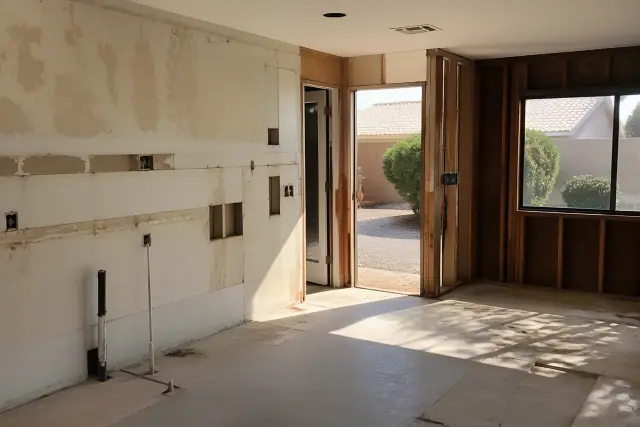
Interior view of a residential demolition project with exposed wall framing in Gilbert, AZ.

Full residential demolition covers utility disconnect coordination with SRP and Southwest Gas, capping, Town of Gilbert permit steps, mechanical teardown, material separation, and rough grading. Crews regularly plan access for the 6,000 to 10,000 square foot lots found in subdivisions such as Cooley Station and Higley Groves.

Explore Service

Commercial Demolition

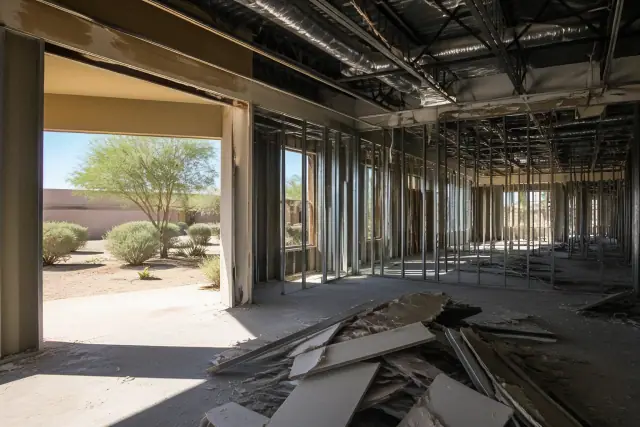
Interior of a commercial office demolition project in Gilbert, AZ showing raw structural studs and exposed conduits.

Commercial demolition supports strip centers, standalone retail, restaurants, offices, and light industrial buildings along corridors such as Val Vista Drive, Gilbert Road, and SanTan Village. Staged work can be coordinated with property managers and general contractors to help neighboring tenants continue operating while permit and air-quality requirements are addressed.

Explore Service

Interior Demolition

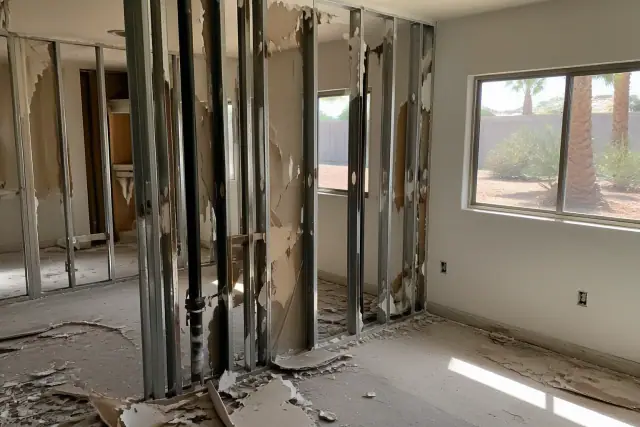
Partially dismantled drywall and metal wall studs during a residential gut renovation in Gilbert, AZ.

Interior demolition removes cabinetry, drywall, fixtures, flooring, and non-load-bearing partitions while preserving the roof, exterior shell, and structural framing. Dust-containment barriers and negative-air setups are used for kitchen, bathroom, and full interior renovations when occupied areas need separation from the work zone.

Explore Service

Selective Demolition

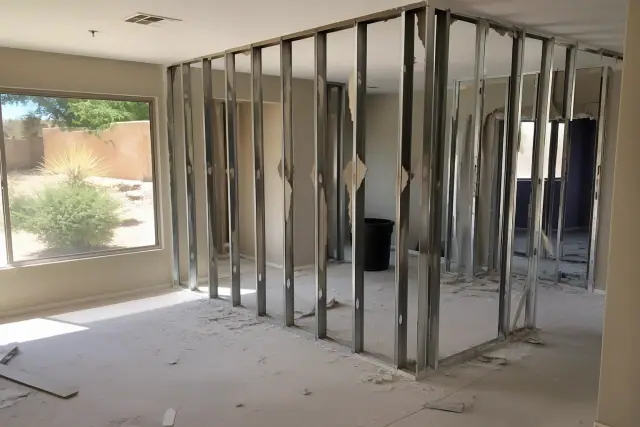
Partition wall demolition in a room undergoing a gut renovation in Gilbert, AZ, with scattered drywall debris.

Selective demolition targets a wall, addition, roof section, or other defined component without taking down the entire structure. It requires a clear assessment of load-bearing elements and careful hand or mechanical methods, especially when updating 1990s homes or working near property lines.

Concrete Demolition & Removal

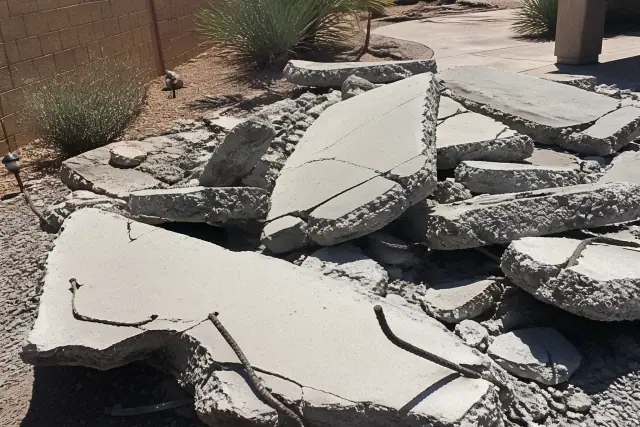
Broken concrete slab with exposed rebar during a demolition project in Gilbert, AZ.

Concrete demolition covers driveways, patios, slabs, foundations, and footings. Hydraulic breakers, saw-cutting, or full excavation are selected according to thickness, rebar content, boundary cuts, and the depth of caliche beneath the concrete.

Pool Demolition & Removal

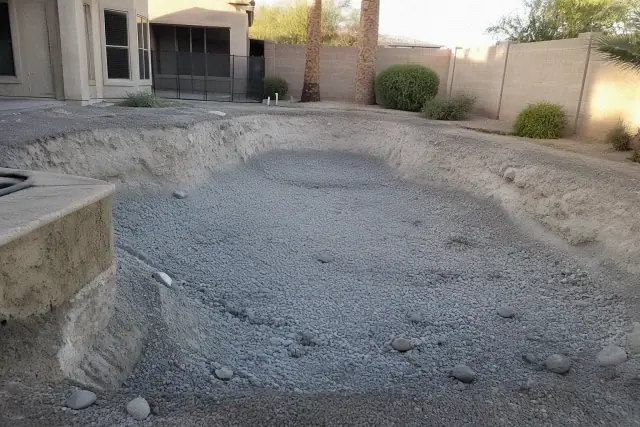
In-ground pool excavation site filled with gravel for backfilling at a residential property in Gilbert, AZ.

Pool projects can use full removal, which takes out the entire shell, or partial removal, which opens the bottom for drainage and uses engineered fill and compacted base rock. Many Gilbert pools date to the 1980s and 1990s, and a typical removal averages two to four days depending on shell size, access, and the selected method.

Structural Demolition

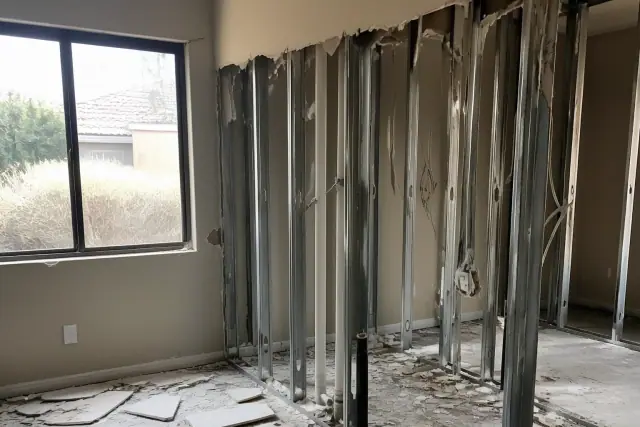
Partition wall demolition with exposed metal studs and drywall debris at a residential site in Gilbert, AZ.

Structural demolition removes load-bearing walls, roof systems, foundations, and other primary building components. An engineering-level review identifies what carries weight before excavators, demolition attachments, or precision hand methods are used near utilities, easements, or property lines.

Garage & Shed Demolition

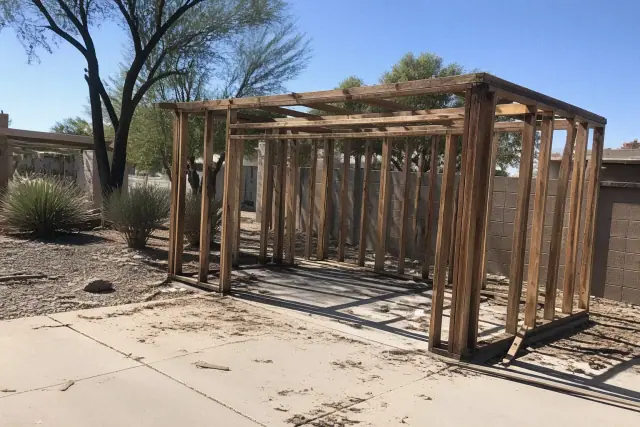
Skeletal wooden frame of a garage under demolition in Gilbert, AZ, surrounded by desert landscaping and site debris.

Garage removal can include the structure, slab, and attached utility runs before the pad is graded for an addition, casita, or lot reconfiguration. Metal, wood, and prefab sheds are smaller scopes, and many can be dismantled and hauled away within a few hours.

Flooring Removal

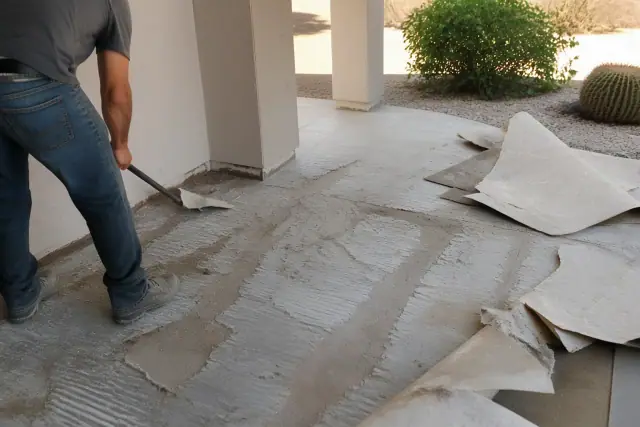
Torn vinyl flooring being removed from a residential subfloor during a renovation project in Gilbert, AZ.

Flooring removal covers tile, hardwood, carpet, and vinyl for remodels and commercial buildouts. Dust-controlled tile methods help limit airborne silica during large tear-outs while the exposed slab is prepared for the next trade.

Site Clearing & Debris Removal

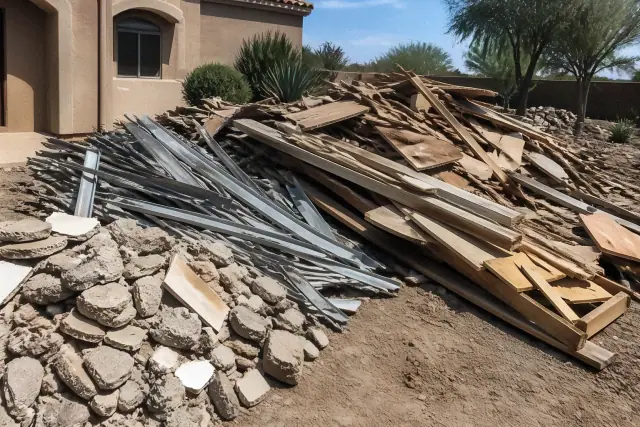
Pile of wood, metal, and masonry debris at a demolition site clearing project in Gilbert, AZ.

Site clearing removes demolition debris, vegetation, slabs, and other materials before rough grading the lot for its next use. Clean concrete, metal, and wood are separated for recycling where possible, and remaining construction waste is hauled to permitted facilities.

Project Planning

Choosing the Right Demolition Approach in Gilbert

The right approach depends on whether the goal is a full rebuild, a protected renovation, removal of one site feature, or delivery of a clear, buildable lot. A site walk should connect the intended outcome to access, structural conditions, utilities, permitting, hazardous-material concerns, disposal, schedule, and cost before equipment is assigned.

Define the Project Scope

Start by deciding what must come out and what must remain. A 1970s ranch teardown, a restaurant buildout, and removal of one load-bearing wall require different sequencing, protection, equipment, and final-site standards.

Evaluate Access and Ground Conditions

Equipment selection depends on gates, setbacks, shared walls, utility easements, neighboring structures, and room for debris staging. Gilbert's hard caliche layer may require heavier equipment for deep foundation or pool removal than surface demolition needs.

Confirm Permits and Utility Disconnects

A workable plan accounts for Town of Gilbert permits, utility disconnection verification, Arizona 811 locates, and any applicable county notification. SRP and Southwest Gas coordination and proper utility capping need to happen before mechanical work starts.

Screen for Hazardous Materials

Older siding, popcorn ceiling texture, and other suspect materials should be identified during assessment. Structures built before 1989 often require an asbestos survey before permit approval, and positive material must be handled by a licensed abatement contractor before demolition.

Plan Sorting, Hauling, and Grading

Compare scopes by what they include after teardown: concrete and metal separation, disposal fees, complete haul-away, backfill, compaction, or rough grading. Defining the finish condition early prevents a low demolition price from leaving cleanup or site preparation unaddressed.

Compare Schedule and Itemized Cost

Ask for an estimate that separates labor, permits, disconnect coordination, hauling, disposal, and grading. Phoenix Demolition Co. walks the site before quoting, can provide a same-day estimate when the scope is straightforward, and discusses financing options for larger projects when needed.

Gilbert Demolition Challenges

Common Demolition Challenges for Gilbert Properties

Many schedule and cost surprises begin outside the structure itself. Access limitations, hard soil, heat, dust, hidden materials, underground services, and approval requirements all affect which methods can be used and what must happen before teardown.

Request a Site Assessment

Tight Residential Access

Subdivision lots may leave limited room between the structure, block walls, landscaping, and neighboring homes. Crews need an equipment path and debris-staging plan that fit the site without turning a precision scope into avoidable property damage.

Caliche and Reinforced Concrete

Caliche hardpan can slow excavation below slabs, pools, and foundations, while reinforcing steel adds cutting and handling time. Thickness, rebar, access, and excavation depth should be assessed before choosing breakers, saws, or heavier equipment.

Heat and Fugitive Dust

Extreme summer heat speeds evaporation just as active demolition creates dust. Early scheduling, wetting, site containment, and ongoing controls help crews work within Maricopa County Rule 310 requirements instead of treating dust suppression as a one-time step.

Suspected Asbestos Materials

Asbestos may be present in siding, ceiling texture, or other components of an older structure. Suspect material can change survey, notification, abatement, disposal, and permit sequencing under applicable NESHAP requirements.

Utilities, Septic Systems, and Easements

Buried service lines, older utility connections, septic systems, shared walls, and easements can restrict where equipment operates. Proper locating, disconnects, capping, and septic abandonment keep these hidden conditions from becoming safety or inspection problems.

HOA and Permit Timing

Many Gilbert subdivisions have HOA notification requirements in addition to municipal approvals. Missing an HOA notice, demolition permit, air-quality filing, or septic abandonment step can delay a project by weeks.

Why Choose Us

Why Choose Phoenix Demolition Co. in Gilbert?

Phoenix Demolition Co. is a family-owned, East Valley demolition company with licensed and insured crews. We apply consistent equipment standards and the same attention to utilities, permits, containment, disposal, and site condition on residential and commercial scopes.

Licensed, Insured, and Documented

The company operates under Arizona Registrar of Contractors requirements and carries general liability and workers' compensation coverage. License and coverage documentation is available on request so property owners can verify it before signing a contract.

Trained Demolition Crews

Crews are trained on OSHA demolition standards under 29 CFR 1926 Subpart T and work with demolition equipment regularly. Site controls, utility locates, structural review, and the choice between mechanical and hand methods are built into execution.

Gilbert Permit and Neighborhood Knowledge

Local planning includes Town of Gilbert Building Division procedures, Maricopa County Air Quality Department notifications, HOA patterns, and older service-line conditions in neighborhoods such as Finley Farms and Ashland Ranch. That familiarity helps surface approval and access needs before they stall field work.

Six-Step Process

Our Gilbert Demolition Project Process

Each project moves from an in-person assessment through approvals, site controls, demolition, hauling, and final site preparation. The sequence is adjusted for a full structure, interior or selective work, concrete, a pool, or a smaller accessory building.

01.

Site Walk and Scope Assessment

We inspect structure size, materials, access points, setbacks, shared walls, easements, and possible hazardous materials. The site walk also establishes what stays, what goes, the desired finish condition, and the basis for an itemized estimate.

02.

Utilities, Surveys, and Permits

The pre-work phase coordinates disconnects, capping, the Town of Gilbert permit, and Arizona 811 utility locates at least two full business days before digging or equipment operation. When required, asbestos surveys, county notifications, and septic abandonment approvals are completed in sequence.

03.

Containment and Dust Controls

Crews establish the work zone, protect occupied or neighboring areas, and set up wetting or interior dust containment. Negative-air methods can isolate interior work, while exterior controls are maintained as material comes down and is loaded.

04.

Controlled Demolition Execution

Excavators and demolition attachments handle suitable full and structural scopes, while saw-cutting and hand methods add precision near property lines, utilities, or components that must remain. The sequence follows the structural review and the planned material flow.

05.

Material Sorting and Haul-Away

Concrete, metal, and wood are separated for recycling where possible. Remaining construction and demolition waste is loaded, hauled, and delivered to permitted landfill or transfer facilities rather than left for the property owner.

06.

Rough Grade and Final Inspection

After debris is removed, the crew completes the agreed backfill, compaction, or rough grade. The site is prepared for final inspection and the next phase, whether that is construction, landscaping, replacement flatwork, or sale.

Project Outcomes

Demolition Outcomes for Gilbert Homes & Businesses

Case Study 1: Full teardowns: A standard single-story mechanical teardown often takes one to three days, while the total project commonly spans one to two weeks once permits, utility disconnects, hauling, and grading are included.

Case Study 2: Interior and selective work: Defined rooms, finishes, or structural components are removed while the protected shell and occupied areas remain separated. Many of these scopes finish within a few days, depending on square footage and structural complexity.

Case Study 3: Larger or complex projects: Custom homes, extensive concrete, pools, or asbestos abatement can extend a project to two to four weeks from approvals through final cleanup. Clear sequencing gives the next contractor a safer, graded, and documented starting point.

Free Demolition Estimate

Schedule a Gilbert
Demolition
Estimate

Request an in-person site walk for a clear scope and itemized estimate covering labor, permit assistance, utility coordination, hauling, disposal, and site cleanup. Call Phoenix Demolition Co. to discuss residential, commercial, specialty removal, or site-clearing work in Gilbert.

Gilbert Demolition Help

FAQs About Demolition in Gilbert, AZ

These answers cover common questions about Gilbert demolition costs, permits, timing, safety, removal methods, and site preparation. A site assessment is still needed to confirm conditions and build a project-specific scope.

Call Our Demolition Team

House demolition in Arizona typically ranges from $8,000 to $25,000, with wood-framed homes generally running $4 to $17 per square foot and masonry or brick structures often running $7 to $12 per square foot. Reinforced concrete elements can run $10 to $18 per square foot, while asbestos abatement, septic or well abandonment, and hauling may add to the base scope. Custom rebuilding afterward is separate and generally costs $350 or more per square foot in the current market.

Most residential and commercial projects require a demolition permit from the Town of Gilbert Building Division. Arizona 811 utility locating, disconnection verification, possible Maricopa County Air Quality Department notification, and separate septic abandonment approval may also apply. Phoenix Demolition Co. coordinates the applicable permitting steps for its projects.

A standard single-story mechanical teardown usually takes one to three days. Permitting, utility disconnects, debris hauling, and grading commonly bring the total project to one to two weeks, while larger homes or projects involving extensive concrete, pools, or asbestos abatement may take two to four weeks.

Yes. Arizona demolition contractors need the appropriate license through the Arizona Registrar of Contractors, and owners should verify status before signing. Phoenix Demolition Co. operates as a licensed and insured contractor and provides verification on request.

A thorough estimate should identify teardown labor, permit assistance, utility disconnect coordination, debris hauling, disposal fees, and final grading. It should also flag possible added work such as an asbestos survey or abatement, septic abandonment, or buried debris. Phoenix Demolition Co. itemizes its estimates after walking the site in person.

Occupants must leave the active site during a full exterior teardown because of heavy equipment, falling material, and dust-control operations. Staying elsewhere on the property may be possible for an interior or selective scope when containment barriers and separation from the work zone are practical. The site assessment determines what is realistic for the specific layout.

Pool demolition focuses on the shell, drainage, fill, compaction, and the future use of the footprint. Partial removal opens the bottom, removes the upper shell, and backfills with engineered fill in compacted lifts; full removal takes out the shell entirely. Gilbert requires a permit and final inspection for either method.

Some commercial projects can be staged so neighboring tenants continue operating. The plan must account for access, structural separation, dust and debris controls, hauling routes, and coordination with the property manager and general contractor. A site review determines whether safe separation is practical.

The crew selects hydraulic breakers, saw-cutting, or excavation based on concrete thickness, reinforcing steel, boundary cuts, and required depth. Foundation removal may need deeper excavation where Gilbert's caliche layer lies below grade. Clean, unreinforced concrete may be separated for recycling.

Pool removal averages two to four days depending on shell size, site access, and whether full or partial removal is selected. Permit timing, inspection, fill placement, and compaction also affect the full schedule.

Interior demolition removes finishes and non-load-bearing components to expose studs and slab while keeping the exterior shell. Selective demolition targets a defined structural or architectural component, such as one wall, addition, or roof section, while protecting everything that remains. Selective structural work requires careful identification of load-bearing elements.

Mobile and manufactured homes use a different process from stick-built structures because title cancellation through the Arizona Department of Transportation is required. Undercarriage materials also need separate handling as part of the removal plan.

Exterior work uses wetting and ongoing site controls consistent with Maricopa County dust requirements. Interior and flooring projects can use containment barriers, negative air, and dust-controlled tile-removal methods to limit migration and airborne silica. The setup is matched to the materials and nearby occupied areas.

Site clearing removes remaining demolition debris, vegetation, slab material, and other agreed obstructions. Recyclable concrete, metal, and wood are separated where possible, remaining waste is hauled to permitted facilities, and the lot receives the specified rough grade for inspection or the next construction phase.

Gilbert is core East Valley territory, including Val Vista Lakes, Power Ranch, Morrison Ranch, Seville, Circle G Ranches, Downtown Gilbert, and the Queen Creek Road corridors. The company also works in Chandler, Mesa, Queen Creek, San Tan Valley, and Tempe, with broader Maricopa County coverage and travel for larger commercial or structural projects on request.