Proudly serving Phoenix, Mesa, Scottsdale, Glendale, Chandler, Tempe & surrounding areasCall or Text 24/7: 480-264-9793
Aerial view of Phoenix, AZ residential neighborhoods, saguaro cacti, and desert landscape during golden hour.

Flooring Removal in Phoenix, AZ for Tile, Stone, Hardwood & Carpet Surfaces

Phoenix Demolition Co. provides residential and commercial flooring removal across Phoenix and the greater Maricopa County metro area. We remove tile, natural stone, hardwood, vinyl, laminate, and carpet for homeowners, property managers, and general contractors. Our related work includes interior demolition, selective demolition, concrete demolition and removal, plus site clearing and debris removal. Each flooring project is planned around the substrate, adhesive, material, and renovation schedule.

Many Salt River Valley homes built since the 1970s have flooring bonded directly to slab-on-grade concrete with thinset, mastic, or contact adhesive. Cracked saltillo, curling vinyl, and delaminating laminate often require material-specific removal before a new floor can be installed. Dustless extraction pairs HEPA-filtered vacuum shrouds with pneumatic chipping hammers and low-speed grinders to capture debris at the point of impact. That approach protects adjoining rooms while helping keep silica-laden dust out of HVAC returns.

A traditional demolition job can release roughly 600 pounds of silica-laden dust into the air in an average room. Our licensed, insured crews use controlled removal methods and dispose of each load through approved Maricopa County facilities. Request a free flooring removal estimate before starting demolition yourself.

Phoenix Demolition Co. provides flooring removal in Phoenix, Scottsdale, Tempe, Mesa, Glendale, and the greater Maricopa County metro area.

★ ★ ★ ★ ★4.9/5 Average Rating · 20+ Years of Experience · Thousands of Customers Helped · Licensed & Insured · Residential & Commercial

Flooring Removal Options & Benefits

What Is Professional Flooring Removal?

Professional flooring removal takes the finished surface, fasteners, mortar, thinset, mastic, or contact adhesive off the underlying slab or wood subfloor. The goal is not simply to break up the visible floor, but to leave the substrate ready for evaluation and the next installation.

Crews first identify the flooring material, fastening method, adhesive, and signs of water or mold impact. Tooling then changes for brittle porcelain, thick mudset, glued hardwood, sheet vinyl, carpet tile, and other assemblies.

Removal can be coordinated with a general contractor, flooring installer, or property manager so demolition, haul-off, and subfloor preparation fit the renovation schedule. Every job includes removal of the flooring debris through facilities that can legally accept the material.

Benefits of Complete Flooring Removal

A complete removal scope controls dust, protects the substrate, clears hidden fasteners, and addresses residue that could interfere with the replacement floor.

  • HEPA-filtered dust capture at the point of impact
  • Material-specific tools that help protect the slab
  • Thinset and adhesive removal for a flat substrate
  • HVAC vent sealing and work-area isolation when needed
  • Staged debris handling that keeps walkways clear
  • Tack-strip, staple, padding, and underlayment removal
  • Scheduling coordinated with installers and renovation teams
  • Legal haul-off and disposal through approved facilities
Flooring Removal Services

Phoenix Flooring Removal Services

Phoenix properties use many floor materials and installation methods, so removal must be matched to the assembly. We handle dustless tile, ceramic and porcelain, hardwood, vinyl and linoleum, carpet, natural stone, and saltillo in residential and commercial spaces.

Dustless Tile Removal

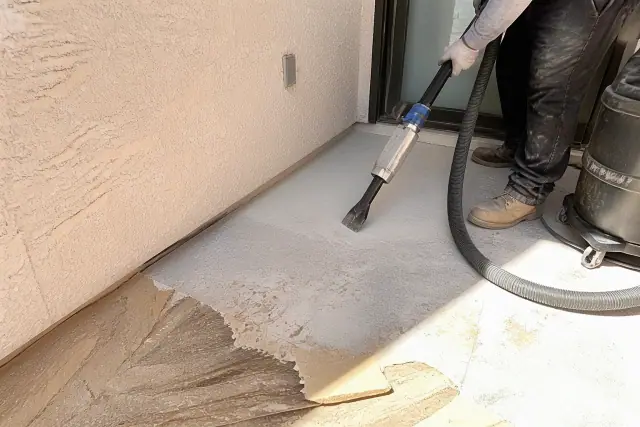
Dustless tile removal on a concrete subfloor with vacuum extraction tools at a jobsite in Phoenix, AZ.

HEPA-filtered vacuum shrouds connect to chipping hammers and grinders to pull silica dust away at the tool head. We can also seal HVAC vents, install poly barriers, and use negative air pressure on larger occupied projects.

Request Estimate

Ceramic & Porcelain Tile Removal

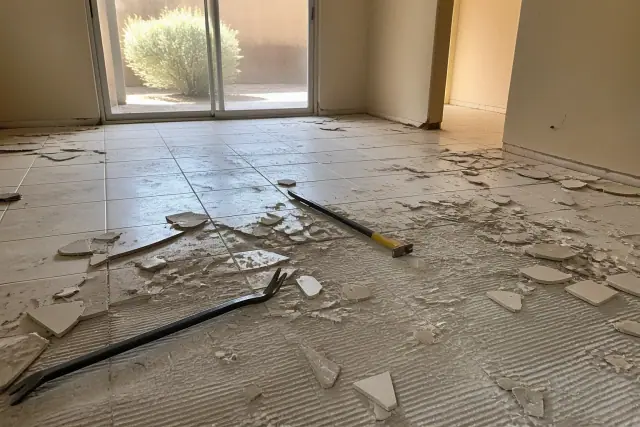
Contractor removing ceramic and porcelain tile from a floor at a residential home in Phoenix, AZ.

Ceramic and porcelain tile require controlled breakage followed by complete thinset removal. A 1990s Sunnyslope ranch with saltillo over mudset calls for different tooling than a downtown high-rise with carpet tile, so we assess the assembly and adjust impact energy to protect the slab.

Request Estimate

Hardwood Flooring Removal

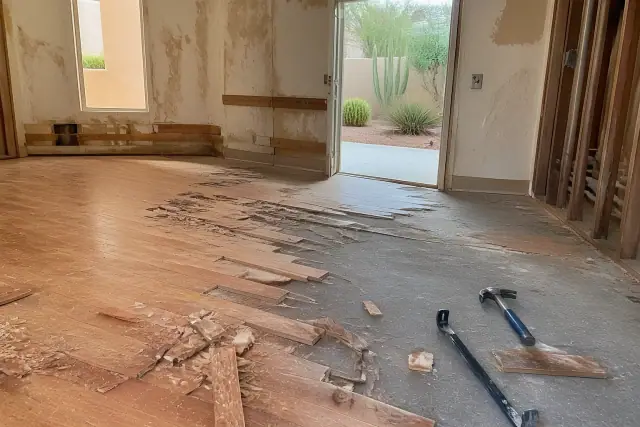
Hardwood flooring removal in progress with pry bars on an exposed subfloor in a Phoenix, AZ home.

Engineered wood may float or be glued in thin layers, while solid hardwood is often nailed to a wood subfloor or bonded directly to concrete. We adapt the removal method to the fastening system, stage splintered material, and check the exposed surface for staining, rot, or uneven leveling.

Request Estimate

Vinyl & Linoleum Removal

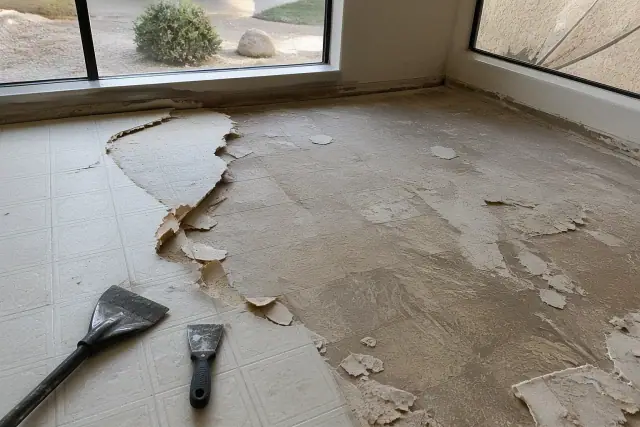
Vinyl and linoleum flooring removal revealing a subfloor with adhesive residue at a job site in Phoenix, AZ.

Floating vinyl plank may peel up quickly, while glued sheet vinyl requires controlled scoring and scraping. We remove the covering in manageable widths, then grind or chemically soften remaining adhesive when the material is suitable for continued work.

Request Estimate

Carpet & Padding Removal

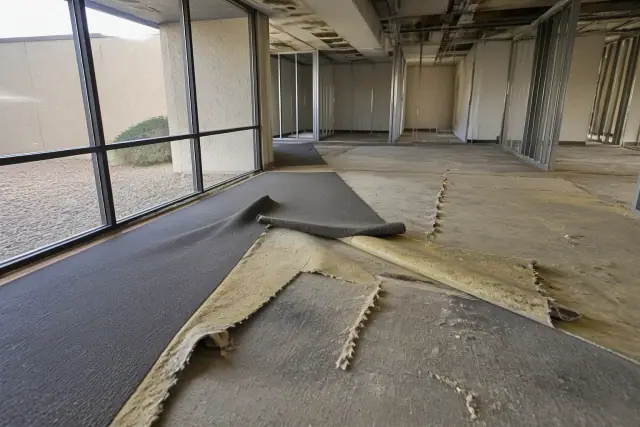
Carpet and padding removal in progress on a commercial office floor in Phoenix, AZ.

Residential carpet and padding are rolled, bagged, and removed together, with every tack strip and staple pulled from the substrate. For commercial carpet or carpet tile, we plan around glue coverage, operating hours, and the installer's schedule.

Request Estimate

Stone & Saltillo Tile Removal

Stone and saltillo tile removal in progress on a concrete subfloor at a residential site in Phoenix, AZ.

Travertine, slate, granite, and saltillo are heavier and often sit in thicker mortar than standard ceramic. We test a small area for bond strength, select mortar-rated attachments, and change the method when salvageable saltillo needs to remain intact.

Request Estimate
Material-Specific Methods

Removal Methods by Material & Installation

The surface material is only part of the removal plan. Bond strength, fastening method, mortar thickness, slab condition, occupied-space protections, and the finish expected by the next installer determine how the work proceeds.

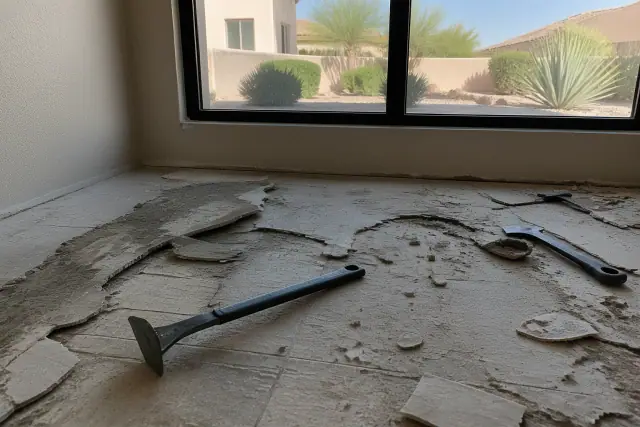
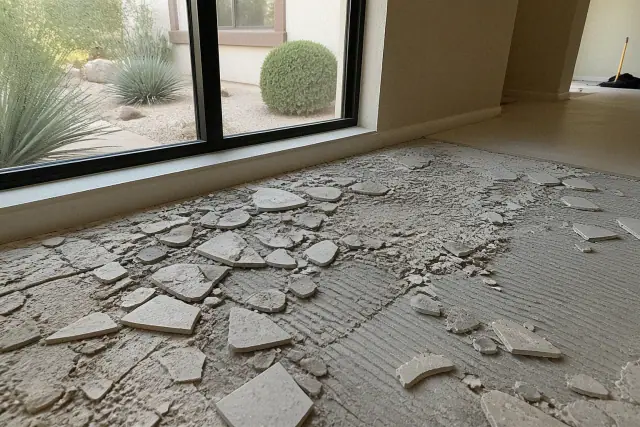
Jagged tile, mortar, and thinset shards on a floor during a renovation project in Phoenix, AZ.

Tile, Thinset & Mortar

Older mortar-bed installations can be an inch or more thick, while newer tile may be bonded with a thinner layer of thinset. We combine controlled chipping, diamond grinding, wet-saw scoring, and mechanical lifting according to the assembly.

  • Ceramic, porcelain, and saltillo surfaces
  • Lower-impact chipping for brittle porcelain
  • Diamond cup wheels for thinset
  • Wet-saw scoring for thick mortar beds
  • Flat substrate preparation for the next floor
Request Estimate
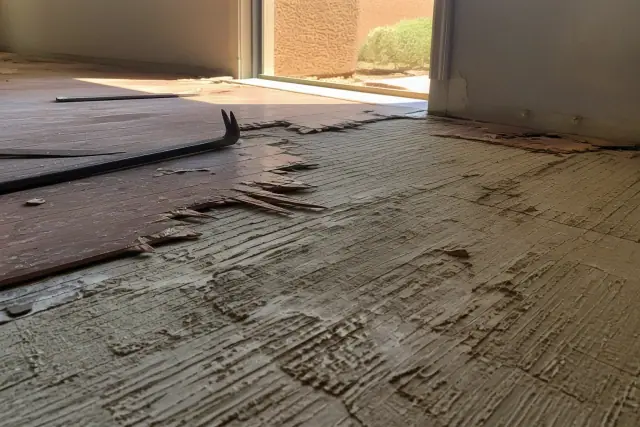
Hardwood and engineered wood flooring removal with pry bars and splinters at a residential project in Phoenix, AZ.

Hardwood & Engineered Wood

Wood flooring removal depends on whether boards float, glue down, or attach mechanically. The crew works with the fastening method instead of forcing the floor and checks the newly exposed substrate before sign-off.

  • Floating engineered plank removal
  • Glued engineered-wood extraction
  • Nailed solid-hardwood removal
  • Staged bagging of splinters and residue
  • Checks for staining, rot, and uneven leveling
Request Estimate
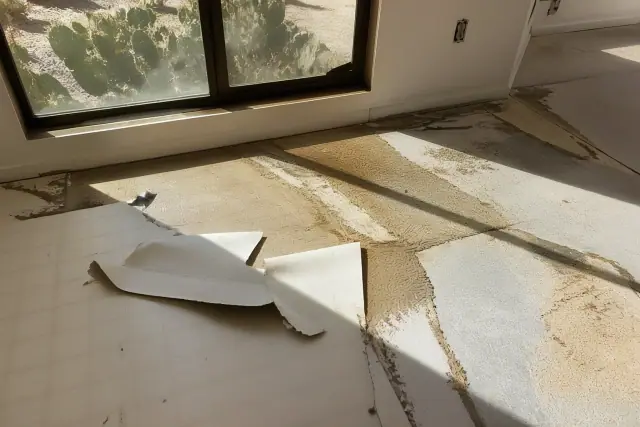
Torn sheet vinyl flooring and adhesive residue on a subfloor in a Phoenix, AZ home.

Sheet Vinyl & Vinyl Plank

Sheet vinyl installed before the 1980s was often set with black mastic that can contain asbestos fibers. If suspect black mastic appears, work stops and testing is recommended before removal continues.

  • Floating-plank peel-up
  • Scored strips for glued sheet goods
  • Controlled adhesive-layer removal
  • Grinding or chemical softening when appropriate
  • Testing referral for suspect black mastic
Request Estimate
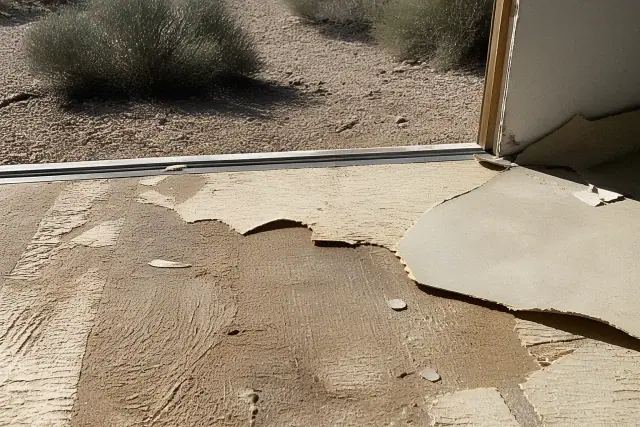
Torn vinyl flooring being removed from a subfloor under the bright sun in Phoenix, AZ.

Carpet & Commercial Coverings

Most single-room carpet and pad removal clears in under an hour, while glued commercial carpet can cover thousands of square feet. Commercial work can be scheduled after hours or on weekends when needed to reduce disruption.

  • Carpet and padding rolled together
  • Glued commercial carpet removal
  • Carpet tile and LVT conversion preparation
  • Tack strips and staples fully pulled
  • Underlayment included with the debris load
Request Estimate
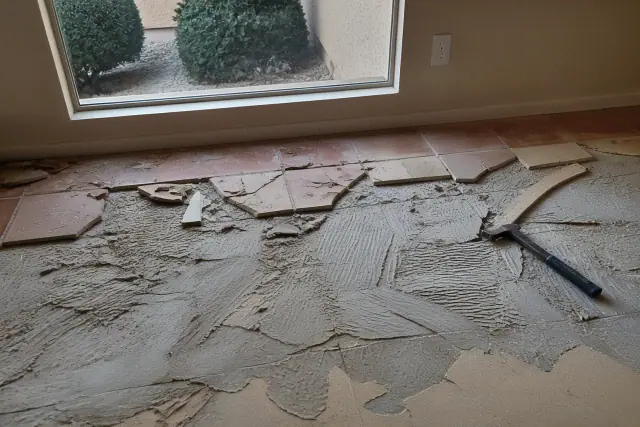
Natural stone and saltillo tiles being pried from a residential subfloor during a renovation in Phoenix, AZ.

Natural Stone & Saltillo

Natural stone and saltillo often combine heavy material with strong mortar bonds. A test section shows the bond strength and helps determine whether aggressive attachments, slower lifting, or a salvage-focused method is appropriate.

  • Travertine, slate, and granite
  • Thick mortar-bed extraction
  • Mortar-rated demolition attachments
  • Small-area bond testing
  • Adjusted methods for salvageable saltillo
Request Estimate
A Careful, Accountable Approach

Why Choose Professional Flooring Removal

The right removal plan balances speed with dust containment, substrate protection, legal disposal, and the requirements of the next flooring installation. Phoenix Demolition Co. evaluates those factors before choosing equipment or setting the schedule.

Dust-Controlled Equipment

Our HEPA filtration line captures particulate down to 0.3 microns and follows the engineering-control approach referenced by OSHA Table 1. Dust is collected at the chipping hammer or grinder instead of spreading through adjoining rooms.

Licensed & Insured Work

Phoenix Demolition Co. is licensed through the Arizona Registrar of Contractors and carries general liability coverage for residential and commercial demolition work.

Coordinated Haul-Off & Disposal

Crews bag or stage material as work progresses, coordinate haul-off with your renovation team, and send every load to an approved Maricopa County facility instead of leaving debris in a driveway dumpster.

When Existing Floors Need to Go

Common Flooring Problems We Remove

Cracking, curling, delamination, water damage, contaminated dust, and suspect adhesives each change the removal plan. An on-site assessment helps identify the surface, bond, and substrate conditions before demolition starts.

Get a Free Estimate

Cracked Tile & Failing Thinset

Cracked ceramic, porcelain, or saltillo can conceal a strong thinset or mudset bond. Controlled chipping removes the tile, and diamond grinding flattens remaining thinset without gouging the concrete.

Curling Vinyl & Old Adhesive

Curling plank and worn sheet vinyl may lift easily at the surface while leaving a stubborn adhesive layer behind. Scoring, scraping, grinding, or chemical softening is selected according to the material and substrate.

Delaminating Laminate

Delaminating laminate needs to come out before a stable replacement surface can go down. We remove the flooring and underlayment, clear loose debris, and expose the substrate for evaluation.

Monsoon-Related Subfloor Damage

Monsoon leaks can leave water staining, rot, or uneven areas beneath aging hardwood near doors and windows. The exposed subfloor is checked after removal so hidden damage is identified before installation.

Silica Dust in Occupied Spaces

Dry tile and thinset demolition can push silica-laden dust into HVAC returns and onto adjoining surfaces. Tool-mounted extraction, barriers, sealed vents, and negative air pressure help contain the work zone.

Suspect Black Mastic

Some older vinyl adhesives contain asbestos fibers. When black mastic is identified, the crew stops and recommends testing before continuing, consistent with Arizona Department of Environmental Quality guidance for suspect material.

How It Works

Our Flooring Removal Process

Every project moves from material and substrate assessment through containment, removal, surface evaluation, and legal disposal. The specific tools and protections change with the floor assembly and job-site conditions.

01.

Inspect the Floor & Substrate

We identify the surface material, fastening or adhesive method, underlying slab or wood, and any signs of water or mold impact before cutting begins.

02.

Isolate the Work Area

Furniture and cabinetry are protected, HVAC vents are sealed, and poly barriers or negative air pressure are added when the project needs greater containment.

03.

Select Material-Specific Tools

Chipping-hammer impact, grinder speed, saw scoring, mechanical lifting, or hand removal is matched to the material, bond, and condition of the substrate.

04.

Remove Flooring & Adhesive

The finished floor comes up in controlled sections, followed by thinset, mortar, mastic, padding, fasteners, or residue included in the agreed scope.

05.

Assess & Prepare the Subfloor

Once the floor is exposed, we check for staining, rot, uneven leveling, gouges, or remaining bond material and complete the planned grinding or scraping.

06.

Haul Off & Dispose

Debris is bagged or staged, removed from the property, and delivered to an approved facility so the space is clear for the next contractor.

Ready to Clear the Floor

Plan Your Flooring
Removal
Estimate

Tell us what floor material you have, the approximate area, and what needs to happen next in the renovation. Phoenix Demolition Co. will assess the removal method, dust controls, preparation scope, haul-off, and disposal for a free estimate.

Flooring Removal Help

Phoenix Flooring Removal FAQs

These answers cover pricing, timing, dust control, materials, substrate protection, disposal, and service coverage for Phoenix flooring removal projects.

Call About Flooring Removal

Standard demolition down to the slab generally starts around $1 per square foot, while dust-free tile removal runs about $3 to $6.50 per square foot depending on tile type and thinset thickness. A typical single-room project falls between $944 and $1,889 including labor, haul-off, and disposal. Demo and haul-off alone typically run $1 to $2 per square foot, with subfloor preparation adding another $1 to $2 per square foot when needed.

Same-day removal is realistic for most single rooms and standard residential jobs. Whole-house and commercial projects are scheduled around the renovation timeline, material, adhesive, and required preparation.

A HEPA-filtered vacuum shroud captures debris directly at the chipping hammer or grinder head. The crew can also seal HVAC vents, isolate the area with poly barriers, and use negative air pressure on larger residential or commercial jobs.

Complete removal can include thinset, mortar, mastic, and other adhesive residue within the quoted scope. Diamond grinding, scraping, or chemical softening is used as appropriate to leave a clean, flat substrate for the next installation.

The crew removes ceramic and porcelain tile, natural stone, saltillo, engineered and solid hardwood, sheet vinyl, vinyl plank, laminate, carpet, and padding. The method is selected according to the material, fastening system, bond, and substrate.

Work stops when suspect black mastic is identified, because some older adhesives contain asbestos fibers. Testing is recommended before removal continues.

Potentially salvageable saltillo needs a different, slower removal method than material headed for disposal. Tell the crew before work begins so bond strength can be tested and the approach adjusted to keep tiles intact.

The crew lowers chipping-hammer impact for brittle materials and uses diamond cup wheels to grind thinset rather than chiseling aggressively into the slab. Thick mortar beds may be scored and lifted in sections to reduce vibration.

The crew checks for water or mold impact before cutting and inspects the exposed substrate for staining, rot, and uneven leveling. Those findings help determine what preparation or separate remediation is needed before a new floor is installed.

Yes. Commercial removal can include glued carpet, carpet tile, LVT, and other flooring in offices or tenant spaces. Work may be scheduled after hours or on weekends when needed to keep occupants operating on schedule.

Yes, each job includes haul-off and flooring disposal through facilities that can legally accept the material. Tack strips, staples, padding, underlayment, and other included debris leave with the flooring rather than remaining for the installer.

Phoenix Demolition Co. serves Phoenix, Scottsdale, Tempe, Mesa, Glendale, and the greater Maricopa County metro area. Residential and commercial projects are available within that supported service area.

DIY removal can gouge concrete, spread silica dust through the home, or damage hidden plumbing lines or slab post-tension cable. Professional crews match equipment to the assembly, contain dust, remove residue, and handle legal disposal.